
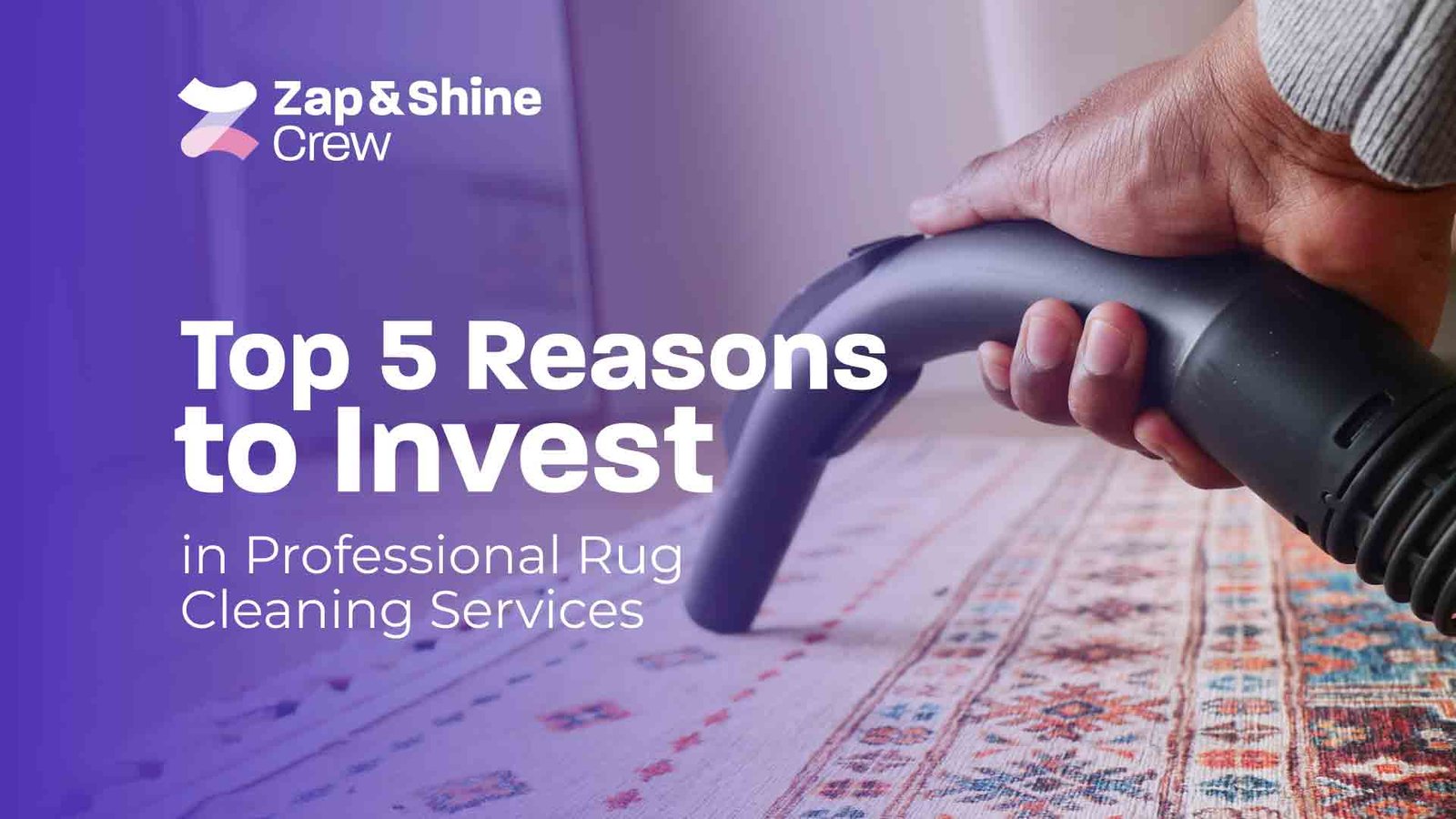
Every few weeks, someone calls us after moving a couch or rolling up a rug for a spring clean and finding something they weren’t expecting underneath. A patch that’s a slightly different colour to the rest. A smell that wasn’t there when the rug went down. Sometimes just a general flatness, like the rug’s lost whatever made it look good in the first place.
Their first question is almost always the same: can I just vacuum this harder?
Not really, no. Vacuuming does a genuinely good job on what’s sitting near the top of the pile. It does almost nothing for what’s worked its way down to the base, and that’s exactly where the damage happens quietly, over months, while the rug still looks fine from a few steps back.
So here’s what we’ve learned from doing this full-time for the past five years, cleaning everything from $50 synthetic doormats to hand-knotted Persian rugs that have been in a family for three generations: professional cleaning isn’t really about making a rug look shinier for a day. It solves a handful of specific problems that build up whether you notice them or not. Here are the five that matter most.
1. It gives you your weekend back
Let’s be honest about what DIY rug cleaning actually involves. You either rent a machine from the hardware store, or you drag the rug outside and go at it with a hose and a scrub brush. Either way, you’re looking at hauling a heavy, waterlogged rug around, working detergent into fibres that don’t want to let it go, then rinsing that same detergent back out (residue left behind attracts dirt faster, so this step matters more than people think), and then waiting. And waiting. In Brisbane, a wet rug can take days to dry properly without help, and a rug that’s still damp on day three is a rug that’s starting to smell musty rather than clean.
A professional visit skips straight past all of that. Our process runs in a fairly fixed order: assess the rug and its fibre, clear out the dry soil first, deep clean with fibre-matched solutions, treat any stains or odours, then dry it properly in a controlled way rather than just leaving it in the sun and hoping. Start to finish, most standard rugs take around 30 to 45 minutes on-site. You don’t rent anything, you don’t buy anything, and you don’t spend your Saturday standing over a rug with a scrub brush wondering if you’re making it worse.
2. It clears out what a vacuum physically can’t reach
Rugs are basically filters. Every bit of pollen, pet dander, dust mite waste, and general grime that comes through your front door eventually ends up worked down into the pile. A household vacuum is built to lift loose surface dirt; it isn’t built to pull contaminants out from the base of the fibres, which is where most of it actually settles.
This matters more in Brisbane than in a lot of other places. Pollen season here is close to year-round: tree pollen tends to peak around August to October, grass pollen builds through spring into autumn, and even winter doesn’t really bring it to zero. If someone in your house sneezes more indoors than out, the rug is a genuine suspect. Hot water extraction, the method most professionals use, flushes those trapped particles out with heat, pressure, and suction strong enough to actually remove them rather than just push them around. For a household with allergies, asthma, or a baby who spends a lot of time on the floor, that’s not a cosmetic upgrade. It’s the actual point of the exercise.
3. It stops your rug from wearing out ahead of schedule
Grit is abrasive. Every time someone walks across a rug, whatever dirt is sitting in the pile grinds against the fibres a little; think of it as sandpaper you can’t see, working slowly and going completely unnoticed until the pile starts looking flat and worn in the high-traffic spots.
There’s a second issue that’s specific to a climate like ours. Wool and natural-fibre rugs hold onto moisture longer than people expect, and Brisbane’s humidity means a spill can look dry on the surface while the base is still damp underneath, which is exactly the environment mould and mildew need to get started. It’s one of the more common problems we see on wool and Persian rugs that have only ever had a DIY clean, because home cleaning rarely includes a proper controlled drying stage. The Carpet and Rug Institute, the industry body that sets a lot of the cleaning standards used across the trade, points to the same thing: periodic extraction cleaning is what actually protects the life of the material, not vacuuming alone. Getting a rug cleaned and, just as importantly, dried properly on a regular schedule is what keeps a good rug good for another decade instead of five years.
4. It brings the colour and texture back
A rug is usually the one thing in a room that isn’t beige. It’s doing a lot of visual work, pulling a colour scheme together, softening a hard floor, giving a space some personality. So when it goes dull, flat, or stained, it drags the whole room down with it, even if nobody in the house can quite say why the living room suddenly looks tired.
This is the part of the job that’s genuinely satisfying to watch. A deep clean lifts dirt that’s been sitting in the fibres long enough to look like a permanent stain, and it re-fluffs pile that’s gone flat from years of foot traffic. Sometimes the difference between the “before” and “after” is dramatic enough that people ask if we swapped their rug for a new one. We didn’t. It was there the whole time, just buried.
5. It’s handled by someone who actually knows what they’re looking at
This is the one that’s easy to underrate until it goes wrong. Wool, silk, and synthetic rugs don’t behave the same way under heat, moisture, or cleaning agents; a treatment that’s perfectly safe on a synthetic entrance mat can bleed the dye or shrink the fibres on a hand-knotted wool piece. We test colourfastness on every rug we haven’t cleaned before, precisely because guessing isn’t good enough when the rug in front of you might be older than the person who called us.
That’s really the difference expertise makes. Not that a professional has fancier equipment (though they do), but that they know when not to use it, which fibres need a gentler hand, which stains need patience rather than more product, and which rug should probably be handled off-site rather than cleaned in place. A rug that’s damaged by the wrong technique usually can’t be undone. That risk alone is worth the cost of getting it right the first time.
DIY vs. professional: the honest version
DIY rug cleaning isn’t a scam or a waste of time; it’s genuinely fine for light surface maintenance between proper cleans. Where it falls short:
- Suction power. A home vacuum, even a good one, isn’t built to pull soil out from the base of a rug’s pile.
- Drying time. Without commercial airflow or dehumidification, a wet rug in a humid climate stays damp long enough for odour and mould risk to set in.
- Product knowledge. The cleaning solution that works on a synthetic rug can genuinely ruin a natural-fibre one, and there’s no easy way to tell that from the label.
None of that means DIY is pointless. It means it’s a supplement to professional cleaning, not a replacement for it.
How often does a rug actually need it?
For most households, once a year is enough. If you’ve got pets, kids, heavy foot traffic, or the rug sits somewhere humid, a lot of Queensland homes tick more than one of those boxes; every six months is the safer call, since dirt and moisture both build up faster here than in a drier climate.
What to actually check before you book someone
Not every “professional clean” is the same service. A few things worth asking before you commit:
- Do they give you a firm quote before starting, based on the rug’s size, material, and condition?
- Do they test for colourfastness on rugs they haven’t cleaned before?
- What happens to the dirty water? Does it leave with them, or does it go down your drain or onto your lawn?
- What’s their drying process, and how do they account for humidity?
- Are their products safe for pets and kids to be around once the rug’s dry?
If a business can’t answer these clearly, that’s usually a sign to keep looking.
A few quick answers
Is professional rug cleaning safe for pets and kids?
Yes, when the cleaner is using non-toxic, eco-friendly solutions, most reputable services do. The only real caution is keeping pets and kids off the rug until it’s fully dry, which your cleaner should confirm before they leave.
Will cleaning shrink or damage my rug?
It shouldn’t, if the cleaner tests colourfastness and matches the method to the fibre first. This is exactly why DIY carries more risk; the wrong product or technique on wool or silk can cause bleeding or shrinkage that can’t be reversed.
Can old, set-in stains actually come out?
Most of the time, yes, especially with hot water extraction and the right pre-treatment. Very old or deeply set stains might leave a faint trace; a good cleaner will tell you honestly if that’s likely rather than promise a result they can’t guarantee.
How long does the whole process take?
Roughly 30-45 minutes of active cleaning for a standard rug, plus drying time. Larger or heavily soiled rugs take longer, and humid climates like Brisbane’s can stretch out the drying stage.
What does it typically cost?
Pricing depends on the rug’s size, material, and condition, so it’s worth getting a specific quote rather than relying on a flat number. Most services (ours included) will confirm the price before any work starts.
The bottom line
A rug isn’t a cheap throwaway item, and treating it like one- a quick vacuum here, a damp cloth there- just means replacing it sooner than you should have to. Professional cleaning deals with what’s actually happening underneath the surface: the grit wearing down the fibres, the allergens sitting in the pile, the moisture that never fully dried out last time. Get that handled properly and the rug you have now can reasonably outlast the sofa sitting next to it.
If you’re in Brisbane, Ipswich, Capalaba, Springfield, the Gold Coast, or the Sunshine Coast and want an honest read on what your rug actually needs, get in touch with the Zap and Shine Crew for a free quote or have a look at what our rug cleaning service actually involves before you book.


